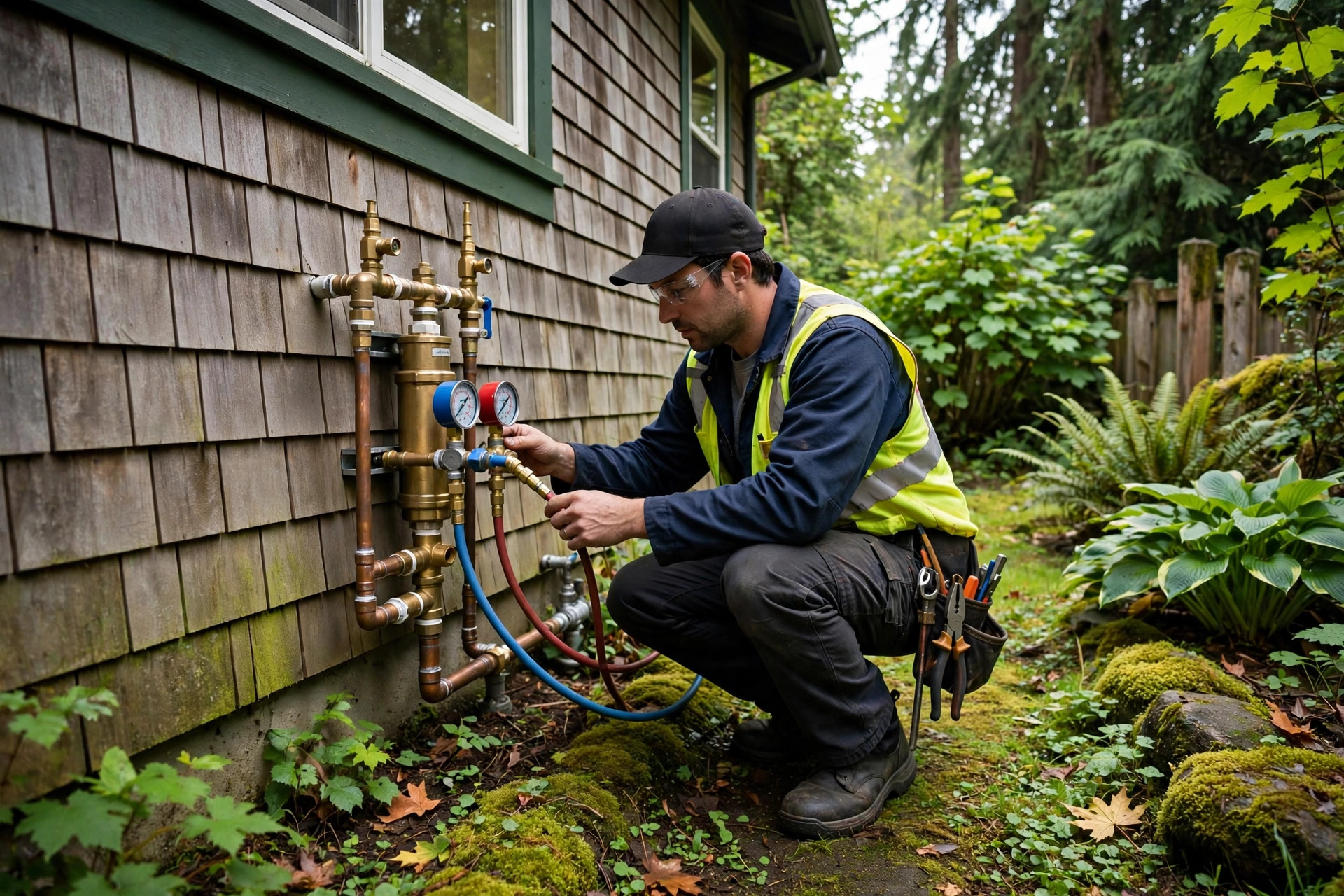
In Portland, maintaining the integrity of your potable water supply is paramount, especially with the diverse plumbing systems found in areas like the historic homes of Irvington or the newer developments in the Pearl District. Backflow prevention devices are critical safeguards that stop contaminated water from reversing flow into your clean drinking water. This is particularly important in a city like Portland, where our extensive river systems and varied commercial and residential properties create numerous potential cross-connection points. Our mild, wet winters can also exacerbate issues if devices aren't properly maintained, as fluctuating water pressure can stress older systems. Regular testing and certification are not just a good idea; they're often a regulatory requirement to protect public health across Multnomah County.
Understanding the different types of backflow preventers is key to effective service. For instance, residential properties, particularly those with irrigation systems or fire suppression lines, might utilize pressure vacuum breakers (PVBs) or double check valve assemblies (DCVAs). Commercial properties, from restaurants in the Mississippi District to industrial sites near the Willamette River, often require more robust reduced pressure principle (RPP) assemblies due to higher hazard levels. The specific device installed dictates the testing procedure and frequency. Our technicians are well-versed in the nuances of each type, ensuring that whether you're in a charming bungalow in Sellwood-Moreland or a multi-story building downtown, your system is assessed accurately and certified according to Portland Water Bureau standards.
The climate in Portland, with its warm, dry summers and occasional heat waves, means irrigation systems are frequently used, increasing the risk of backflow if devices fail. Conversely, the mild, wet winters can lead to ground saturation, which can affect underground systems. We don't just test; we also provide detailed reports and handle all necessary paperwork for certification with the local water authority, ensuring your property in neighborhoods like Alberta Arts District or Division-Richmond remains compliant. Ignoring these requirements can lead to significant health risks and potential fines, making proactive maintenance an essential part of property ownership in the Portland metro area, including nearby cities like Beaverton and Gresham.
Technician insight
In Portland, the thing that catches most people out with backflow prevention testing is often the age of the device itself, especially in older neighborhoods like Irvington or Hawthorne. Many of these older homes have devices that are either past their service life, or weren't installed to current code, leading to unexpected repair needs during what homeowners expect to be a routine test. The fluctuating pressures from our distinct wet winters and dry summers can really expose these weaknesses.
Resolving a Failed Backflow Test in the Pearl District
A property manager in the Pearl District called us after their annual backflow test failed due to a faulty relief valve on their RP assembly. We quickly dispatched a technician who diagnosed the issue, replaced the worn components with new, compliant parts, and retested the device, ensuring the building passed inspection and maintained its water safety certification without extended downtime.
Backflow Prevention Testing and Certification in Portland Services We Offer
✓Annual Backflow Device Testing
Ensure your backflow prevention assembly meets Portland Water Bureau requirements with our thorough annual testing, crucial for properties across Multnomah County.
✓Backflow Device Installation
Expert installation of new backflow prevention assemblies, custom-fitted for your property's specific needs, whether residential or commercial, in areas like Nob Hill or Woodstock.
✓Backflow Device Repair and Maintenance
Comprehensive repair and preventative maintenance for all types of backflow preventers, extending their lifespan and ensuring continuous protection against contamination.
✓Cross-Connection Control Surveys
Identify potential cross-connections on your property that could lead to contamination, providing solutions to safeguard your water supply in Portland neighborhoods.
✓Certification and Reporting
We handle all necessary certification paperwork and submit reports directly to the Portland Water Bureau, ensuring your compliance without hassle.
✓Reduced Pressure Principle (RP) Assembly Service
Specialized testing, repair, and installation for high-hazard RP assemblies commonly found in commercial and industrial settings throughout Portland.
✓Double Check Valve (DCVA) Assembly Service
Dedicated service for DCVA assemblies, suitable for moderate hazard applications, including residential and light commercial properties in areas like Laurelhurst.
✓Pressure Vacuum Breaker (PVB) Testing and Repair
Testing and repair services for PVB devices, frequently used for irrigation systems, ensuring they prevent back-siphonage effectively.
How it works
- 1
Schedule Your Appointment
Contact us to set up a convenient time for your backflow prevention testing or service. We operate Mon–Fri 8am–6pm, Sat 9am–2pm, serving all of Portland and Multnomah County.
- 2
On-Site Device Inspection
Our technician will arrive at your Portland property to locate and visually inspect your backflow prevention assembly, noting its type and condition.
- 3
Certified Backflow Testing
Using specialized, calibrated equipment, we perform the required tests to ensure your device is functioning correctly and preventing backflow according to Portland Water Bureau standards.
- 4
Reporting and Certification
Upon successful testing, we complete all necessary certification forms and submit them to the appropriate water authority on your behalf, providing you with a copy for your records.
- 5
Repair or Replacement (If Needed)
If your device fails testing, we'll provide an upfront quote for any necessary repairs or replacement, explaining the issue clearly and offering efficient solutions to restore compliance.
Pricing
Pricing for backflow prevention testing is typically a flat rate, with additional costs only if repairs or replacement parts are needed after the initial inspection and test.